Showing posts with label Japan. Show all posts

Monday, January 12, 2009

TV Dorama: Voice


abis nonton Voice eps pertama di Fuji Terebi.
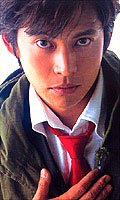
wahhhh, diriku koufun sendiri karena liat Eita-kun jadi peran utama.
Udah gitu... jreng jrenggg!!! mereka ternyata syuting di Hitotsubashi, di Nishi Campus lebih tepatnya.

Ngelewatin Kanematsu koudo, ngelewatin jam gede perpus, ngeliat keijiban di samping nishi shokudo, makan di nishi shokudoo... wahhh, kampus tidak akan terasa sama lagi dehhh ;p

## entry orang stres...
tsukaretaaaaaaa, jadi males memulai bikin paper gakkai
nengok ke belakang, ngeliat kalender dan menyadari bulan satu tinggal tiga minggu lagiii
HUAAAAA... mau nangisss...

Monday, June 23, 2008

Rikkyo Daigaku


Went to Rikkyo Daigaku, Ikebukuro campus, last weekend for a conference. Didn't know beforehand that they are also called St. Paul's University (kept wondering why they sell other university goods, instead of their own). A glance will took us to see an old European buildings complex...

Just a bit further inside, you will find a campus cafeteria that has this beautiful architecture. Very much like an old hall, and very much reminding me of Harry Potter's Hogwarts dining hall...

So cool...
(too bad I didn't had the courage to took pictures there... hehehe)
But here's one of the main gate clock.

Thursday, January 24, 2008

Lica リカちゃん Miracle


Around late noon, when I was having my lunch in my room, I turned on the TV and see this adorable, very natsukashii doll. Her name is Lica, well at least it was by that name I first came to know her, it turned out that the doll "real" name is Rika-chan, written in katakana.


My memory about this special toy is that this doll was my first human-look-alike doll after the longggg yearsss of playing with my dear old snugly big Snoopy (still have him, or was it her??, back home). Lica was a birthday present from my dad, if I'm not mistaken, for my 6th birthday. And not only did Papa gave me Lica, he also gave me Lica's house!!! There was of course no need to the describe how happy I was at that time, as happy as a six year old little girl can be when receiving such sweet presents **thanks, Papa...


And why all the sudden of this reminiscing mood? Let me get back to the TV show. Apparently it was about Lica's new series after a long 40 years of production. While promoting the new series, they took the opportunity to analyze the history of Lica, as good Japanese always did... hehehe...


There were four announcers, two of them was women who had the luxury of playing with Lica during their childhood, well, one of the male announcer also join in.... "Heee???" was of course the responds from his colleagues, which he afterwards calmly explain that the Lica was his sister's and he usually played it with his GI Joe, for war scenes... (LOL)


Anyway, as easily as the two female announcers did, I also really got into the story. And here are some of the facts that I didn't know about Lica:


1. My Lica was the third version of Lica series: indicated by the three stars in each of her eyes, higher nose, and a rather round face.


2. Lica is a 11 years old girl! Which kind of explain why she look so out of place next to my Barbies, how do you compare an 11 years old little girl's figure with Barbie's, anyway?!! Duuhh...


3. Lica is half Japanese, half French!! At the first production of Lica (around 60s), though international marriage had became a social icon also in Japan, the relationship between the US and Japan wasn't in a good term (hence, the hanbei nationalism sprung to mind), so they chose French to be the nationality of Lica's father--plus there was this image of romanticism along with the French, even now I think. Interesting...


4. Lica is "only" 21 cm tall. And why? Because Takara Tomy wanted to make a doll fits the Japanese house. The dolls from West are usually too "big"--average 30 cm--for the Japanese domestic situation. And this was also the reason for producing Lica's house that can be fold. I think Japan was the first to invent a folding doll house (I had one also, I think it was the 4LDK version). The Western doll's house is simply too bog for the small and efficient typical Japanese houses.


5. The inside of Lica's house changed according to the Japanese real economic situation. During the bubble period the folding house consists of a proper room by room set up, a room for one, this was made because during this period any luxury was affordable. Nowadays Lica's house, consists of big kitchen/dining room, because Takara Tomica wanted to emphasize on the necessity of family having meals together, to support family communication, especially because there were a lot of family tragedies/incidents lately in Japan.


6. Even the psychology disposition of the doll swifted along with people's way of thinking and identifying themselves. Lica who was once "I want to be like my mom, to be fashion designer like her", now is traveling around the world alone, trying to find her own self while saying "I want to be like my mom, a sophisticated woman like her"


Interesting how a "mere" doll can produce such analysis, wasn't it? But I think you can do a lot of observing the society from the toys they produces... want to try it on GI Joe? hhehehe...


Wednesday, January 23, 2008

You have been in Japan too long...

You have been in Japan too long...

when you are tongue-tied to find your words in your mother tongue. when you consider any city apart from Tokyo as "countryside" . when tempura is really a dish for "gaijin" (and you don't consider yourself as such anymore) when you finally start enjoying some Japanese TV programs. when you plan you next holiday back home as a savanah expedition.

when you want to travel, but have no time because of your work and are reluctant because foreign countries are so dangerous. when you sell your futon for a bed, because it's cool (even though you've slept all of your pre-Japan existence in one, but you can't remember) when you know exatcly the percentage of opening of cherry blossoms near your house, and watch attentively their development day after day, then talk about it with anyone you meet.

when you think it is reasonable to pay 3000yen for a taxi rather than walk 30min to go back home after the last train. when you wonder what omiyage you'l bring back to your colleagues and friends before leaving for you holiday/vacation. when you refer to your nose when you say "I". when you think Y4000 is a reasonable prize for a nice melon.

when you stand in front of a taxi and wait till the driver will open the door. when you cut the air with your hand (like a sword) when you want to cross a group of people. say sumimasen whenever you want to apologize for things that might happen or maybe not. when you wish you have a fan in summer to cool yourself on the street. when you look for people in front of a train station who distribute paper handkerchiefs.

when you miss the phone ads in the phoneboxes (do I?). when you prefer walking in geta while your wife calls the psychotherapeutic (well actually she didn't, but warned me so). when you start loving natto and uni. when you make a bow after getting the money from the cash mashine. when you buy beer by can labels (well I did it, but just to collect the stuff). when you leave the warm water in the bath tub for your kids.

when you buy local sweets/food to bring them home as omiyage, even your weekend trip was just 100 miles from home. when you start to believe that nori makes the hair stronger. when you think eating with otemoto is faster than with fork and knife (and actually you are faster with it). when you buy gifts for co-workers whenever you leave town, even if it's just for a few hours. when you end your statements with random vagueness.

when you hide from the NHK man routinely. when your rice maker is always on. when you take 8 breaks a day at work, and shuffle the papers on your desk at least twice a hour. when you take your shoes off...in the dressing room of a clothing store. when you read English words and start reading with Japanese pronunciations (e.g., DATE becomes da-te).

when you don't bat an eye when you see a salary man on the train looking at a magazine with nudity. when you find yourself nodding your head back to the newscaster at the beginning and end of a newscast. when you actually dream in Japanese. when you return to your home country and drink soup directly from the bowl when you think no one is looking as it's so much easier. when you think US$7 is not bad for a cup of coffee and a sliver of cake or pie. when you can't wait for the next 15 min episode of the NHK morning drama.

when you can actually make fried rice, Omu rice, and a complete Tonkatsu dinner. when you select shoes based on how easily you can get them on and off. when you can name all the members of SMAP. when you answer "hai!" even when speaking English to non-Japanese friends. when you can fall asleep on the train and wake up at your stop. when you don't mind peeing in a public restroom with the cleaning lady standing next to you.

when you don't even need a restroom to pee in public. when someone says "breakfast" you think of fish, soup and pickles. when you think they mean your neighborhood whenever you hear U2's "Where the Streets Have No Name." when you believe no party is complete without a trip to the karaoke. when someone says "mansion" you picture a two-bedroom flat in a 400-unit apartment building. when you mutter "yoshi!" when lifting heavy objects or reaching the top of the stairs. when you make a loud "haaah" after each sip of hot tea.

when you notice improvement in your Nihongo when you start ordering "hotto doggu" instead of "atsui inu"! when you can convert katakana back to English without having to first sound it out ten times slowly. when you can't even have a family picnic without an opening and closing ceremony. when you wonder whether you should take the bus or a taxi instead of having to walk one kilometre. when you think it's ok to play the march of the British Grenadiers in TV commercials.

when after a day in the metro you hear in you head "Tokyo metro wo go-ryo itadakimashite arigatou gozaimasu. kono densha wa...yuki desu". when you start wondering if the policeman in front of you will check you bicycle registration just because you are a "gaijin". when you are tired of being asked if your country has four seasons, if yo can eat sushi and natoo, eat chopsticks and sleep on a futon, although you have been here for years.

when you go back to your home country and are surprised to see so many "gaijin". when you explain the difference between a Shinto shrine and a Buddhist temple to your Japanese friends. when you wonder what famous "tarento" or "actror/actress" your Japanese friends look more like. when you ask other foreigners what kanji they chose for their hanko. when you have changed you keitai's ringtone 10 times this week and wonder what which tune you should download next.

when you think you should call the electrician to change a lightbulb, as your forgot how to do. when you can't stop saying "samui, samui" to yourself when it's a bit cold, and "atsui, atsui" when it's slightly too hot. when you wonder how many women will offer you chocolates on Valentine's Day (or to how many people to give some, if you are a woman). when you start saying "eeeh" and "oooh" in front of the TV, just to do like everybody. when you ask your Italian friends if they have pasta in Italy.

when you are persuaded that Christmas is a ancient Japanese tradition, and Jesus was in fact Japanese. when you think that "minus image" is proper English (as in "these clothes really give him minus image"). when you wonder why all those gaijin take "aspirin" and not "bafarin" for headaches. when you think that that taking 5 kinds of kanpou (Chinese herbal medicine) all year round is necessary to keep you healthy.

when you check which dog is popular at the moment before buying one. when you look forward to winter in your Japanese house so you can store beer and frozen foods in your bedroom and bathroom. when you realise you need feet massage and hot baths in winter because it's colder inside your house than outside. when you are worried because the cherry blossoms are late. when you watch Chinese or Korean movies relying on the Japanese subtitles.

so, have you been in Japan too long?

***re-post from Monkasho 2007 mailing list

Hatsu Yuki


hehehe... nyulik judul filmnya Lee Jun Ki.


After burrying myself with postmodernism books and choosing hikikomori lifestyle for several days, I decided to come out from my room today... out of all the days!! for morning class nevertheless... **yuuki aru neee...


***took this pic while holding my poor stomach that has been complaining since lastnight and disturbed my sleep...

Wednesday, October 31, 2007

Travel: Jimbocho Old Book Festival

Supposed to go to this event last Saturday, but the squall (well, not really but still it was harsh rain with lots of wind, made me more reluctant to get out of bed) made me stayed at my room. Went on a sunny Sunday instead. And apparently there's a lot of people who had the same plan.

This was my first time to go to this district, a very well known area for publishers, rights agents and book store it turned out to be! Duh! should have known that before... Passed the sign for Iwanami Shoten along the way...

As the name "festival" pointed out, me and my friend took the wrong turn and went to the less crowded part of Jimbocho and browsed around there, until we finally realized that we should went to the center of the festival first while the time was still young. By the time we got there, the place was sooo swamped with people, we barely can see anything that was displayed.

I went with a tight budget, and a more tighter strain inside my head, because it was the end of the month and the monthly life support hasn't came. But alas, "kalap" was the word, as I always do when it has anything to do with books, I went and got myself five books, one postcard collection of old jimbocho street and one Shinhwa CD (boy, I was such a sucker for cheap price! It was only 500 yen! A brand new CD!!!)--the little sis would probably like it.

So I got this:

1. The Charlie Brown Dictionary, cause I'm such a Peanuts' fan

2. Charlie Brown's Super Book of Questions and Answer, look at the reason above...

3. Lonely Planet: Korea, yup, I'm going there next month, might as well be prepared

4. Nihon wa naze sensou wo hajimetanoka (= Why did Japan start the war?), for my "light" reading... NOT!

5. Sumatora no Yoake (= Sumatra's Morning Star), also for my research


Right now, I'm a bit regretting the fact that I didn't go to Yasukuni Jinja and see what it's all about. Probably because my backpack was heavy with all those books... **sigh

Note: Jimbocho can be reach using several lines, but I chose the Shin-Shinjuku line from Shinjuku station to Jimbocho station. Jimbocho is weel-known for its rows and rows of book stores and publishers' office; guess this is why they called it the book area.

Saturday, September 29, 2007

Music: HEART by Ai Otsuka


今すぐ会いたいね、、、;p

Thursday, May 10, 2007

Travel: Hitotsubashi University


Among other things that I like about my campus are its old romantic buildings. And the surrounding of it also. It has two campus area: West and East, which are separated by this beautiful street called Sakura Douri.

As the name itself has suggested, in spring, this street is filled with rows of sakura trees from different kinds (pink, white, greenish, etc). That is why many people come to the university for hanami (flower viewing).

The vast area inside the campus complex sometimes also served as a garden for families, children, or anyone to spend some time, sitting and reading, painting and so on.

Too bad I didn`t took any good pictures from that period of time (the sakura only bloom for about a week). I'll definitely gonna took some more next year :-)

Oh yeah, the campus itself can be reached after walking about 5-7 minutes from Kunitachi station (JR train, Chuo-sen).

Images: taken by chihiro, May 2nd, 2007

Sunday, April 15, 2007

Blog: Leaving the Comfort Zone


"What the heck am I doing?” was the question I repeated over and over again to myself during last week, before going to the country so close in my heart. “I’m like digging a hole to bury my self in, looking for trouble when I can just live a normal and save life!”

The question grew larger and more disturbing when I was packing the max 30 kilo baggage. Tears rolled and frustration literary choked me so hard, I felt like undoing the things I’ve done this past one year: not entering the documents, not doing the tests, interviews, not accepting the scholarship.

Yeah yeah, I knew I’m lucky. Many people will gladly take my place. But still…

Most of you probably have read somewhere about having a comfort zone. Mine were my job, the office, my apartment, my whole routine life for the last five years. I was like in this nice warm comfortable big chair where I can drink my favorite hot chocolate, reading books, or writing something on the computer, while listening to some Korean/Japanese songs.

On April 2nd I was to leave all of that, and when they say it will take a mighty effort to just get up and change your life, oh boy the were so RIGHT!!! “I don’t wanna go to Tokyo!” the feeling actually escaped and sounded by my mouth out loud.

But anyway, have to say that I’m kind of proud of myself now. Taking the big chances and actually doing them, instead of just thinking and dreaming.

And here I am, typing this in my dorm room. I’m on the fourth floor, and there’s a sakura tree blooming right outside my window. Haven’t got a good camera. So hopefully these pictures I’ve taken with my mobile will suffice.

So now, I’m fine. As the late Ratu’s song, “Aku baik-baik saja…” ;-))
Wish me all the luck, guys...

Tuesday, February 13, 2007

TV Drama: Tiger and Dragon

I have always been curious about the usually middle ages men, sitting on a pillow, wearing kimono, speaking enthusiastically about god knows what to an audience, with a fan most of the time at one of his hand. They’re seemed to telling his audience funny stories cause whatever they’re saying they will be rewarded with laughter. I didn’t get it at the time, because of my minimum Japanese (still minimum now ;-p).

That is why I’m so glad that I found this dorama. The subtitles and the “modern” interpretations of this traditional art which has hundred of years history helped me a lot. I finnaly knew that there was a name for this kind of show: Rakugo. And now, I totally understand why there were fanatics among the Rakugo fans. It will be a pity indeed if the young generations considered it only as old men’s thing.

Just like lines in a play, the monologues and stories in Rakugo seemed to be fixed, the story tellers have to memorize all of them—which means learning by heart all the old-difficult to remember-Japanese words. There were several scenes when Toraji (Tomoya Nagase) had to add some more furrows among those already twisted brows of his to do this.


As expected, the stories were ancient ones: about Confucius and his burnt stable, lazy fisherman and his wife, simple storeowner and a rich and greedy nobleman, etc. All of the stories contain teachings, critics, anecdotes, etc; in short, stories that are more than meet the eyes.

In short, the dorama was about a yakuza member, Toraji (Nagase Tomoya) who has to collect payments from a Donbei (Nishida Toshiyuki) whose son (Ryuji, played by Okada Junichi) used the money to open an eclectic clothing store. Surprisingly, Toraji later discovered and fell in love with Rakugo (traditional Japanese comical monologues) through Donbei who later teaches him the art (became his Shishou). And in the dorama, Toraji invented a new way to perform Rakugo, and his was very fresh and fun to watch! Yakuza's Rakugo!!!


The story then revolved around Toraji (Nagase) who’s trying to master Rakugo, his Shishou Donbei (Nishida), and Ryuji the Shishou’s son (Okada). In this sense, I really felt that Nagase and Nishida were definitely dominating the screen; Okada presence was even felt unwelcome. Okada didn’t really contribute much for the dorama, in my opinion. I was totally rooting for more Nagase’s and Nishida’s scenes.

And don’t let me start on the Megumi character (Itoh Misaki). She’s totally irritating. Watching her trying to be funny almost always made me rolled my eyes. But then again she probably was born to play as a dull-helpless and not so smart girl. Ups, I maybe a bit harsh, there… ;-p

Anyway, I was entertained and personally amazed on how they were able to create seamless transitions between the rakugo story telling, the re-enactment of the story itself, and then the current drama happenings. Each episode focuses on a different rakugo story but still proceeded at a nice pace.

Side comments:
- Wow, V6 still exist? Hehe sorry, guys. But I really didn’t thought that this boyband will last this long…
- Nagase has surely developed nicely over these years. I first saw him as a young lover in Koibito Yo, I think, and that was about ten years ago. Never had much interest in him or his band TOKIO at the time, he was also cute back then, but wasn’t really my type. I was more into the SMAP and Kimura Takuya ;-p. But now he looked alarmingly attractive… **Could it be that Chi has found another eye candy? Hehehe.
- Except for the two people I have said my remarks about earlier, all the casts were having great chemistries! The yakuzas, the Hayashiatei’s people (that’s the name of the Rakugo Theater), all of them were great.
- New blood to be accounted for: Tsukamoto Takashi who played Nagase’s young yakuza apprentice. Should definitely look for more of his dorama.
- I didn't get the first special episode, which would explain why I felt something missing at the beginning of the first episode of the series.

Rate:
Casts:

Nagase Tomoya as Yamazaki Kotora / Hayashiyatei Kotora / Tora / Toraji / Toravolta
Okada Junichi as Yanaka Ryuji / Hayashiyatei Kotatsu
Itoh Misaki as Megumi
Nishida Toshiyuki as Yanaka Shoukichi / Hayashiatei Donbei / Shishou / Don-chan
Shoufukutei Tsurube as Nakatani Ken / Ken-chan (Shinjuku RyuseIkai Kumicho)
Tsukamoto Takashi as Nakatani Ginjiro / Gin-gin

Genre: Comedy Episodes: 1 Special + 11 Broadcast Network: TBS Broadcast Period: 2005-Apr-15 to 2005-Jun-24 Screenwriter: Kudo Kankuro Directors: Kaneko Fuminori, Katayama Osamu, Tsuboi Toshio Theme Songs: Opening song: Tiger & Dragon by Crazy Ken Band; Ending song: UTAO-UTAO by V6 Language: Japanese

Source:
http://wiki.d-addicts.com/Tiger_&_Dragon
www.ilbondrama.net

Friday, February 09, 2007

Blog: Japanese Wave in Korea

TV review - That rumbling noise is the Japanese wave (2007/02/06)

If you want to know what's hot in Korean culture just now, I have the answer — Japan. The so-called "Korean Wave" appears to have lost its power, at least in Japan. I am Korean through and through, but I have to say this, even though hot-blooded patriots might start showering me with angry e-mails. Still, this is a free country and this is my column. So allow me to talk about something that I cannot miss in the Japanese cultural flow that is secretly seeping over the Korean Peninsula.

I still believe the Dokdo Islets, which Japan claims as Takeshima, should belong to Korea (although I wish the midget islands were simply not there), but I find myself enjoying Japanese novels, TV dramas and music. And I'm not the only heretic. Go to a downtown bookstore and you will see that one of the busiest sections is dedicated to Japanese modern novels and beloved writers such as Amy Yamada and Kaori Ekuni.

Yes, I've declared myself long ago as an aficionado of Japanese TV dramas. But the thing is, my love for Japanese TV dramas was kept in the closet. Translation: I saw many of them in pirate versions floating on the Internet. Now they've come out of the closet, as many cable channels are importing and running the dramas.

There is even a Japanese channel, called Channel J, exclusively devoted to Japanese cultural imports. On a recent night I almost screamed with joy when I saw the "Ooku" series on Channel J while mindlessly flicking the remote control. It's a historical drama featuring catfights among women who compete for the attention of the shogun in a Tokyo castle. It is a huge favorite of mine because of the splendid kimonos and other traditional Japanese charms. I worked the phones and found out that Channel J was officially launched with Korean capital.

Kim Jong-rae, in charge of publicity, ducked the question about audience ratings, refusing to give precise numbers. The closest he came to an answer was to say that the channel's most popular drama ranks around 30th among the shows aired by more than 100 cable TV channels. "Still, we get phone calls from a fanatical audience, who want their favorite TV dramas and pop music", Mr. Kim said.

Another publicist for MBC Movies, a cable channel run by MBC-TV, is more frank. She said that the highest rating for her channel's Japanese TV drama is some 2 percent at the most. So, I asked, are Japanese TV dramas not so popular here? Then I was told that a 2-percent audience rating is quite good when it comes to a cable TV channel. "It's true that we are disappointed by the audience rating", she said. "But we understand that Japanese TV dramas here have a small group of fanatical fans, not a huge general audience".

She added that her channel plans to import more of the shows. Currently, it is running "Nobuta-o Produce", a recent production from last year.

Major TV networks, meanwhile, have constantly come up with their own dramas derived from Japanese originals. The most recent one is the medical TV drama, "White Tower", based on a Japanese TV novel and drama with the same title.

The Korean government still bans shows in the Japanese language from major public-airwave channels, but a little channel surfing on cable TV will prove that Japanese language programming is readily available. "Secretto Sensei", meaning "Secret Teacher" in English, recently finished on Mnet, a cable music channel here. It featured Korean musicians learning Japanese from a Japanese woman. Understandably, quite a large amount of the show was in Japanese.

Well, it's true that the Korean Wave is still alive and somehow kicking, but it's time to wake up from that sweet dream that hallyu will hit the world after conquering Japan. The alarm clock is ringing, and it could soon be time to get ready for a different cultural invasion.

by Chun su jin

Source : joongangdaily.joins.c... ( English Korean )

Wednesday, January 31, 2007

TV Drama: Attention, Please!

Though I usually like the “inspirational” type of dorama, this one was only okay for me. And sadly to say, Aya Ueto was the reason for this. Other than this dorama, I have saw her in Azumi 1 and 2, and she played charmingly in those movies. But regrettably, I found her performance in Attention Please annoying; so much that there were times that I felt like giving her the eye to shut her up or making her come to her senses.

She supposedly played as Misaki Yoko who was raised amongst three brothers, and ever since she was young, she enjoyed the company of boys over girls. So as you can imagine Yoko was a boyish girl who is bullheaded. She starts a band with four of her boy friends and becomes the lead singer. But rather than acting tomboyish attitudes, Aya Ueto was more often loud and irritating.

Anyway, one day, one of the members of the band, Tsukasa, gets a job in Tokyo. Yoko was secretly had feelings for Tsukasa but kept it for herself. When she and the band saw Tsukasa off at the airport, the guys got excited when they see some cabin crew ladies. Tsukasa was also commenting about how he would like to see Yoko dressed in uniform. From that simple and airy comment, Yoko became determined. She decided to apply as a cabin attendant and go to Tokyo!


Thus begin the new life of Yoko. She had to face the mocking and jeering from people, because after all she had all the raw attitudes and the appearance of a punk rocker. But after a while she became honest to herself and realized that she should be doing this seriously, for her own sake and not anybody else.

Along the way of seeking true life’s aspiration, Yoko met a technical engineer Nakahara Shota (Nishikado Ryo) and befriended closely with Yayoi (Aibu Saki) and Saori (Uehara Misa), also cabin attendant trainees. Playing Obiwan who trained the young rebellious grasshopper—cabin attendant trainer, Mikami Tamaki—was Maya Miki.

Nishikado Ryo contributed a lot to make this dorama a likely good entertainment. He has this Vic Zhou aura that easily caught my attention. They should thank him, A LOT.

But the drama wasn't completely helpless as we got a glimpse of cabin attendant’s life behind the glamorous stage (the hard training, etc).

Rate:
Title (English): Attention Please Casts: Ueto Aya, Nishikido Ryo, Maya Miki, Aibu Saki, Uehara Misa, Koizumi Koutaro Episodes: 11 Genre: Comedy Broadcast Network: Fuji TV Broadcast Period: 2006-Apr-18 to 2006-June-27 Theme song: "OH PRETTY WOMAN" by Kaela Kimura Language: Japanese

Source:
http://wiki.d-addicts.com/Attention_Please
www.ilbondrama.net

Friday, December 29, 2006

Movie: Hana Yori Dango

Oh mi god, seeing this movie was like being given a blast to the past. The fashion statements in the movie were too thick to be ruled out. Hahaha.

While of course, obviously, it’s not really their fault to be teenagers in the 80’s—wearing those big and goofy hairs, big accessories, bright clothes, etc—I couldn’t help my self from frowning at the sight of Domyouji’s wardrobes. I mean, yes, we know that it’s natsu (summer) but can you imagine going to campus with nothing on your upper body except a black leather vest—that’s, to say the least, accompanied by a pair of matching leather black pants to complete the look? Well, but I guess it was Domyouji Tsukasa after all, he can wear anything he likes. Hmm... wait a minute, this was a 1995's production? Weird...

Other than the interesting wardrobe stuffs, there were of course the casts. You see, I bought this movie mostly because of Naohito Fujiki (Slow Dance, One Litre of Tears) and partly because the Hana Yori Dango’s story itself—love it after all, regardless how I used to dislike Yuki Uchida—she’s too loud for me back then. But it turned out that Fujiki didn’t get too many scenes, and some of them didn’t even have strong acting—could it be because of his young age? The beach scene was quiet touching, though.

As for Yuki Uchida… well, it turned out that I got it right the first time! Hehehe. Her scenes were somehow only consisted of shouting, pouting, shouting, and more pouting with very short skirts. There was not even one layer of good delivering on her side; this made me felt so sorry for her co-stars.

There was one pleasant surprise in this movie: young Shosuke Tanihara (Oh-Oku, Gokusen 2) playing Domyouji. His performance could be considered well-played compare to the others’. He looked great with tan—and this almost made his wardrobe forgiven, almost… ;-p

Oh, and I think there was Norika Fujiwara playing as one of the rich spoiled girls—barely recognized her underneath all that hair (^-^)

Because this was a summer movie the choice of scenes were more resemble to the Taiwan’s version (Meteor Garden)—ergo, there’s the beach scene where Domyouji caught Tsukushi Makino and Hanazawa Rui kissing in it, unlike Hana Yori Dango’s dorama which showed more autumn and winter backgrounds.

Over all, I blame it all to the script writer/s and the editors. They somehow managed to reduce the great dialogues and scenes into emotionless frames. Too bad! But if you’re a great fan of this lovely story, you should still watch it, for comparison, perhaps. My deep thanks to doramalover!

Rate:

Casts:
Yuki Uchida, Shosuke Tanihara, Naohito Fujiki Broadcast Network: Fuji TV, 1995 Language: Japanese Source: www.doramalover.com

Thursday, November 30, 2006

TV Drama: Blackjack ni Yoroshiku


Another Tsumabuki’s dorama. Got a little curious about this one, cause it got a lot of praise from a dorama’s fan website. I gave it a go, and found myself a bit bored; the dorama was not as addictive as I thought. Didn’t know what went wrong, the casts were not so bad—Tsumabuki even, IMHO, showed an all-in heartfelt performances, the stories were different almost per episode, showing different conflicts possible in medical cases.

Eijiro Saito (Tsumabuki) was a fresh graduate from Eidai University, a prestigious institution for medical study. He then joined in the university’s hospital as an intern. Unlike Hollywood's doctors television drama, Saito was far from the perfect, genius-know-how, and new cool doctor image. He made mistakes, almost every time—in this case, every episode—and cried a lot because his heart often didn’t correspond with those of his senior doctors’. There was a lot of pressure that made him rethink his decision on becoming a doctor.

At first, I was a bit annoyed by Saito’s weak character; it seemed that he always came to tears every time there was an obstacle. On one of the early episodes, Saito ran and hide himself in document’s room, his hand shaking wildly, from a badly injured traffic accident patient, living him only with the nurses! But I guess, this made the story felt so real; imagine yourself as a new intern who has to conduct a heavy operation by your self without senior doctor’s supervision… It really can break someone up.

And then, when Saito’s mother visited her son, she said something that stuck even until now in my mind: “Don’t worry, Eijiro, your tears were actually your strength… ever since you were a child. Now will not be any different.” And this saying was proven true, Saito always bounce right back off—and this is so typical of a Japanese dorama, which I like: the main character met obstacles, failed, but then instead of giving up, he/she struggled very very hard to get what he/she wanted. Bravo for Tsumabuki who played this character well!

Tsumabuki was not the only one who dominated the screen; I like Kyoka Suzuki’s character, Nurse Akagi Kaori, a lot. She’s so beautiful and fit right in into this mysterious, sophisticated, sexy nurse character—please note that when I say “sexy”, I didn’t mean it as rated R’s sexy, since maybe many of us have come to associate the nurse profession with other-not so mentionable-things here ;-p. Anyway, Nurse Kaori was the one who helped Saito a lot in his search of determination; loved the chemistry between the young intern and this older woman, too bad there were no romantic scenes, other than subtle ones. Hmmm... could this be the reason why I got bored? Hehehe.

Talking about side stories, Dekune (Kato Koji) was Saito’s fellow intern, who supposedly dwelled with his own problems: being the second son of a doctor’s family, his dad even owned a hospital, he felt pressured to become a doctor. I said “supposedly” because although his face and name were all over the opening and ending credits, he didn’t get many scenes; kind of puzzled me why he got such a big portion in the first place.

The theme song was from my dearest favorite J-Pop singer: Ken Hirai. The first lines in this song were so perfect for this dorama, and perhaps the lives of some of us? ;-p

“Jibun wo tsuyoku misetari , jibun wo umaku misetari.
Doshite bokura wa konna ni ikigurushii ikikata (wo) erabuno?”

= Showing our own self we’re strong, showing our own self we’re superb.
Why do we choose this hard-to-live way of living?

Casts: Tsumabuki Satoshi, Suzuki Kyoka, Kato Koji, Matsuo Masatoshi, Sugimoto Tetta, Ogata Ken, Miura Tomokazu Title: Blackjack ni Yoroshiku Also known as: Hello Black Jack / Say Hello to Blackjack Genre: Melodrama Episodes: 11 Broadcast Network: TBS Broadcast period: 2003-Apr-11 to 2003-Jun-20 Theme Song: LIFE is... ~another story~ by Hirai Ken Language: Japanese

Source: http://wiki.d-addicts.com

Tuesday, November 28, 2006

TV Drama: Jikou Keisatsu


It really was great to see Odagiri played in a comedy again after Satorare. I like him better doing this kind of shows compare to the “serious, tasted like avant-garde” scripts. He was really funny, his jokes/gestures made me laugh out loud for so many times—though this maybe because I was blinded by love for him. He always looks good in my eyes ;-p

In this dorama he played as Kiriyama Shuuichiro, a desk job police whose duty involved filing documents, evidences, or other cases’ related physical matters. The whole story was started in a rather silly way, actually. Kiriyama’s superior officers and his fellow officers were talking about having a hobby; Kiriyama joined in, and then realized that he didn’t have any. Kiriyama was described as a nerdy weird guy with unique taste of hairstyle—Odagiri’s hair looked great!!!—and thick dark green frame glasses; he also has a trademark laugh.

After a rather long game of throwing nonsense ideas—they do this quiet often, the jokes were definitely not going to be easy to translate because there were a lot of word-play; love it when they’re doing this—Kiriyama finally decided that he will investigate old unsolved cases that had been stamped (literally) “Jikou”—had reached statute of limitations. His motive was only to confirm who was the real felon and make him/her admit of having committed the crime; he also made special card to give to the felon after wrapping a case, that reads “Dare ni mo iwanai kaado = Will not tell anyone card” sealed with his inkan (family name stamp that has the same function as a hand signature).

Even though the cases were serious: usually murders, the solving were more often made according to Kiriyama’s style, which was full of silly deductions and unconventional investigation’s techniques. My favorite part in one of the investigations was when Kiriyama confronted a college professor suspected for murdering her high school friend: suddenly, out of nowhere, a group of acapella singers showed up and joined Kiriyama in singing Mori no Kuma-san. My reaction was, “What the—Huahahaha…”


The characters of this series were generally funny and know what there’re doing, but sadly—even though I’m sure she had tried her best, Asou Kumiko’s performance could not be described as other than a neglect. So sorry to say this, but she was poorly not funny! Playing as a policewoman from other division—traffic, I think, who’s in love with Kiriyama, her constant nagging and making cute-desperate-faces were not working at all. Jealousy… oh oh, jealousy… ;-p

Over all, Jikou Keisatsu was a good entertainment. I kept on watching this series because although the felons were easily guessed, it was really fun to watch Kiriyama’s theory for each case, including finding out the motive of the murder. That, and of course: spoiling my eyes with high dose of ODAGIRI JOE!!!

Cast: Odagiri Joe, Asou Kumiko, Toyohara Kosuke, Fuse Eri, Mitsuishi Ken, Eguchi Noriko, Iwamatsu Ryo, Hida Yasuhito Title: Jikou Keisatsu Title (English): Time Limit Detective / Statute of Limitation Police Genre: Comedy Mystery Duration: 9 episodes Broadcast network: TV Asahi Broadcast period: 2006-01-13 to 2006-03-10 Theme Song: Ame by Ceyren Language: Japanese

Source: http://wiki.d-addicts.com/Jikou_Keisatsu; www.ilbondrama.net

Friday, October 20, 2006

Blog: Nostalgic Mood

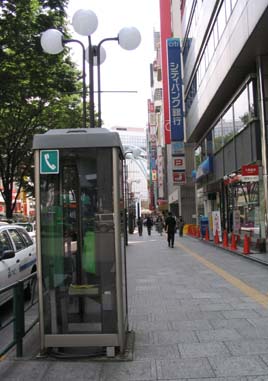
Every time I’m in a nostalgic mood towards Tokyo, I will take the “not so newly-imported-from Japan” PPD 46 Bus (Kampung Rambutan-Grogol). I will endure the hot wind that rarely blow from its big windows—cause the constant stopping and the slow moving—and pretend it was Tokyo’s summer breeze.

In good days, I’ll get to see the still operating (at least, I thought it is, because of the red light) “Push if you want to get-off” buttons written in kanji. I will stare at it long and hard, remembering the times when I concentrated in trying to figure out what it’s saying and smile.

Tips: while in the bus just ignore the loud vendors, the mysterious odors from your neighbor, the non-air conditioned air, the dirty and rather torn-up seats, and all of that, and you’ll have Tokyo, no doubt about it! ;-p

Of course, these nostalgic moods have consequences: the 30 minutes drive will easily turn into 45 minutes or even 1 hour trip! Blahhh! That, and there’s no guarantee for your dashing looks to stay the same afterwards…

Note for pictures taken by chihiro 2005: 1) One of the street at Tachikawa 2) Ghibli’s Museum Bus—common type of bus in Japan

Wednesday, October 11, 2006

TV Drama: Orange Days


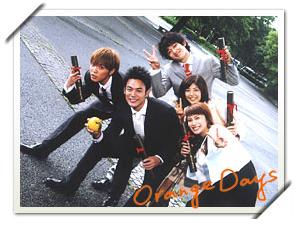
The story: five people (three guys, two girls) who met and become friends in their last year of college. The hero was Yuuki Kai (Tsumabuki): a nice guy-next-door type who was searching for his purpose in life after graduation; at first, as it was in his nature, he just wanted to help Sae Hagio, but then fell for her instead. The heroine was Sae Hagio (Shibasaki): a genius in musical instrument, after studying in Julliard, US, decided to concentrate with her violin, but then she got a disease that challenged her hearing.

Comments:

  • The pace on this drama was a bit slow, so there were times when I quit watching the TV screen and do something else to kill time.
  • The chemistry between Shibasaki Kou and Tsumabuki Satoshi was also a bit off, I was kind of glad when the girl planned to go to German and marry the other guy. Too bad this was a happy ending drama ;-p
  • Shibasaki's character was getting her lines in shiwa (sign language), this was a bit annoying cause the subtitles were bad, and my kanji vocabularies were limited.
  • Tsumabuki surely has made a nice career over these years, after the old Water Boys and Sabu, so far I have watch this dorama, and his movie: Haru no Yuki, dorama: Black Jack ni Yoroshiku, and now waiting to watch dorama: Slow Dance.
  • A surprise: didn’t know that Takashi Kawashibara was in the casts also, so when he showed up I was like, “Hey, I know this guy!” He dyed his hair rather orangey—not a recommended move; a bold one, though. Liked him in Itazurana Kiss—translated by yours truly for Indosiar at the year 2002 ;-p.


Casts: Satoshi Tsumabuki, Kou Shibasaki, Hiroki Narimiya, Eita, Miho Shiraishi, Manami Konishi, Takashi Kashiwabara, Masaru Nagai, Ikki Sawamura Genre: Romance, Friendship 11 episodes 2004 Language: Japanese

Wednesday, October 04, 2006

TV Drama: Odoru Daisousassen


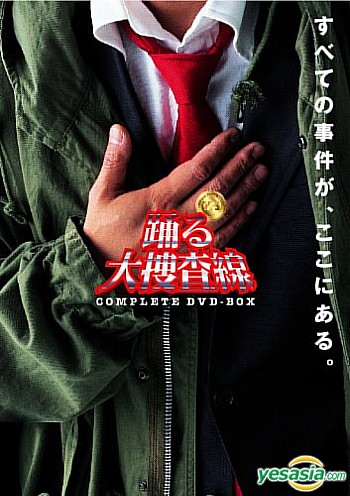
You do remember the forever unforgettable Tokyo Love Story, right? The dorama was played at RCTI more than ten years ago, I think. It was the first Japanese modern dorama played in Indonesia. Kanchi and Rika Akana, those names were probably the first two Japanese names I had managed to memorize properly. Well, in this dorama, Odoru Daisoussen, Oda Yuji (the guy who played Kanchi) was back to be the leading role.

As Aoshima Shunsaku, Oda was an ex-salesman who drastically shifted job into a policeman. He dreamed of becoming a cool crime detective like the ones he saw on TV, solving difficult cases and helping people--described as wanting to see "minna no eigao" (people's smile). But when he was promoted into a detective and put on duty in Wangan Area, Tokyo's Bayside Precinct, the reality was far from what he expected. Resigned from the business world to avoid the pressure of obligations to please clients or top management as a salary man, he was disappointed to find that the internal politics in the police department were not far from those he had to cope in a big company.


The Metro Police Department (MPD)—the headquarters or some sort, limited the authority of the cases at hand. Policemen from district’s office didn’t have the jurisdictions for almost every case; they were also treated as a good for nothing that should always make ways for the MPD officers, even when the crime was committed in the Wangan District! Everybody seemed eager to reach the top career in the police organization; the department’s or individual’s fame and glory were the main objective, the victim were forgotten and treated as objects instead of people.

There was an exception: Superintendent Muroi (Yanagiba Toshiro), the commanding officer of Crime Section in MPD, who later on—even though with undeniable reluctance—always backed up Aoshima’s rather rough approaches.

But of course this is not a romance dorama, so don’t expect Kanchi’s melancholic cute face here. Instead, you will enjoy Oda’s different acting as an idealistic and frank policeman, sometimes even a rather silly one; there were some scenes that featured him trying to play bad cop with the attitude. The cases were quite intriguing; the internal police politics were entertaining; the casts were funny and serious in the right places; the chemistries were well felt; the blending of comedy, drama, action and romance in its story was also enough of a treat; over all: it was good entertainment.

One last, not so important comment: Oda Yuji really has nice hair; it looked so soft and smooth. Few times I imagined touching and stroking it—wondering how it would feel ;-p His green long coat in this drama was also a memento.

A.k.a: Police investigation headquarters / Rhythm and Police Casts: Oda Yuji, Yanagiba Toshiro, Eri Fukatsu, Miki Mizuno, Ikariya Chosuke, Ono Takehiko, Satoi Kenta Genre: Police Drama 11 episodes Fuji TV 1997 Language: Japanese

Monday, September 25, 2006

TV Drama: Oh-Oku: Hana no Ran


“SERU ABISSS!” Hahaha, sorry, I couldn’t find a suitable synonym for that reaction in English. I was kind of bored with Black Jack ni Yoroshiku, so I tried to watch this taiga dorama instead. New problem aroused: I was hooked to the story and the casts.

I got the perfect description for the term “suka maen perempuan” when watching the Ue-sama’s (the shogun) embarking on his love adventures. Really, a quick glance of a pretty face would seem to do the trick for him. Lelaki oh lelaki…But I have to admit the shogun was quite handsome and nice looking for a “buaya darat” ;-p

This Oh-Oku series took place in the fifth Shogun Tsunayoshi reign. Oh-oku itself bore the resemblance of a sultan’s harem; in it, lived the shogun’s mother, the number one lady (official wife from a political marriage, came from a wealthy and powerful family) and the shogun’s concubines. From all of those ladies, the story revolved mostly on the shogun’s mother who have the biggest power in Oh-Oku, the main lady who felt stripped from her rightful position because she haven’t bore any children, Oden the ambitious concubine who gave the shogun two children, and a new concubine—the shogun’s true love—Yasuko.

Just like Indonesian sinetron that revolves on the theme of inheritance feud, the men here were almost puppets-like where as the women play as the puppeteers. The shogun was so helpless against his mother; she always pressed him with religious threats such as the country will be damned if he don’t obey, etc.

But over all, the mother didn’t constrained her son from other mischiefs as long as they didn’t interfere with her master plan. But the shogun’s typical mischief was the one that began the story. The shogun was visiting one of his loyal servant’s home when he requested the lady of the house—was a maid at Oh-oku—to “serve” him that night. Being the loyal servant, the husband swallowed his pride and granted this wish, while Yasuko the daughter and her husband were helpless to do any other. But the problem didn’t submit only for one night, the shogun kept coming again and again with the same request.

Ashamed and hurt, the lady committed seppuku, leaving the family into a devastated state. The drama didn’t stop there, hearing this tragic event and in order to “help” the family back on its knees, the shogun requested Yasuko to enter Oh-Oku as his concubine even though she’s already married. Yasuko agreed and answered this summon, with only one thing in her mind: revenge for the death of her mother. Complications rose when she realized how fragile the shogun really was, his true love for her and a child in her womb.

Oh yeah, must of course praised the three ladies on the main casts; while Rina Uchiyama who played Yasuko was really loveable, Norika Fujiwara showed her powerful acting as Nobuko, the main lady, she was really fit the description of Snow White's beautiful yet evil queen.

Eiko Koike as Oden also was notable, the twitch of her almost not visible eyebrows were the horror of the screens, really reminded me of Japanese lady ghost character. Brrr.....


Japanese title: Oh-Oku: Hana no Ran a.k.a. War of the Belles Casts: Rina Uchiyama, Norika Fujiwara, Shosuke Tanihara, Eiko Koike Genre: Taiga Dorama Language: Japanese Duration: 9 episodes Broadcast Network: Fuji TV, 2005 Theme Song: Shuraba by Tokyo Jihen
Source:
www.ilbondrama.net; http://wiki.d-addicts.com

Wednesday, July 26, 2006

TV Drama: Nobuta Wo Produce

Yes! We have only been too familiar with the storyline about an ugly duckling turned into swan and finally get the handsome prince.

Even though I have to admit, that kind of storyline will always gets my attention every time, as if one version of it wasn't enough; that was what happened to me when I bought the copy of this TV dorama.

The synopsis told me about Nobuko Kotani a new student in a senior high school where Shuji Kiritani and Akira Kusano have been passing their two-going on-three years of their teen life.

As you already can guess, Nobuko was weird, geeky, new girl who easily attracted the class’ bullies; smiling was so a rare action for her, that at one time, Shuji actually asked her whether her stomach was hurting after seeing the girl’s face. It turned out afterwards that the weird expression was her attempt to smile.

Shuji on the other hand was the popular boy at school; he managed to have his own crowd and supporters and was dating Mariko, the most popular girl in school. Akira was “the rebel without a cause” who always seemed to be “high” on something judging from his unstable moves; but as the story developed, it turned out that the something was non-chemical; all were owed to his own charming self’s personality. Somehow Akira always thought that he’s Shuji’s friend, while Shuji always found Akira totally annoying.

The title “Nobuta wo Produce” itself means Producing Nobuta. By strange fate, Shuji and Akira get together to become producers of Nobuko, who later on would go by the name Nobuta, the name the two boys had made up for her. Shuji was supplying the tips in becoming popular, while Akira, who turned out to be the only son of a wealthy businessman, naturally, supplied the funds (for clothes, beauty salon, etc).

What made me stay through the ten episodes was the fact that the story didn’t focused on making Nobuta the beautiful princess and then The End, they all live happily ever after. And this, was a fresh point a view, I thought. Oh yes, Nobuta had her make-over. When somebody ruined her school uniform, her producers decided that they could take advantage of this: Nobuta would get the pass to wear “her own clothes”. So the three of them shopped away! And at the morrow, Nobuta showed up at school, very tastefully dressed and wearing a fabulous new hair! I was kind of surprised to see the make over was already happening at the beginning of the episodes. But later on I understand, “making a typical popular person” was not the main theme of this dorama.

As the story flowed, we became aware that taking a role as the popular person was not all-fun-happy-cheery task. While producing Nobuta, Shuji was becoming more and more aware that every single day in his life was based on lies only; lies that he continued to tell in order to preserve other’s good opinions on him. How exhausting is that?!?! In reverse, Nobuta was becoming more self-accepting and comfortable with her unique self. Akira was also looking more stable when he found two people who were willing to acknowledge him for what he was and needing his help. Problems then seemed to come tumbling one after another, the three of them realized that somebody knew about the Nobuta wo Produce Project and aiming to destroyed it.

There will be no school dorama without love affairs: Shuji have to be honest to Mariko, that he didn’t really like her, he only maintained the relationship to withhold his reputation. Akira was finding himself falling for Nobuta, while he was certain that Nobuta has feelings for Shuji. Was Shuji actually felt for Nobuta too? Who will Nobuta choose between her closest friends?

The climax for the main problem in the story was sadly felt a bit neglected, leaving the ending dry and all alone. The tension surrounding every element in the storyline was somehow built quite nicely but then… I don’t know… was left to waste, perhaps? And then I missed the emotion-rollercoaster I expected to ride every time I watched a good dorama; you know, when you laughed and then cry and then laughed again stuffs…. Well, it was still entertaining enough… Nobuta Power, Chu-IN!

Casts: Kazuya Kamenashi (Kat-tun), Tomohisa Yamashita, Maki Horikita Language: Japanese Duration: 10 episodes Source: yeasasia.com; www.ilbondrama.net